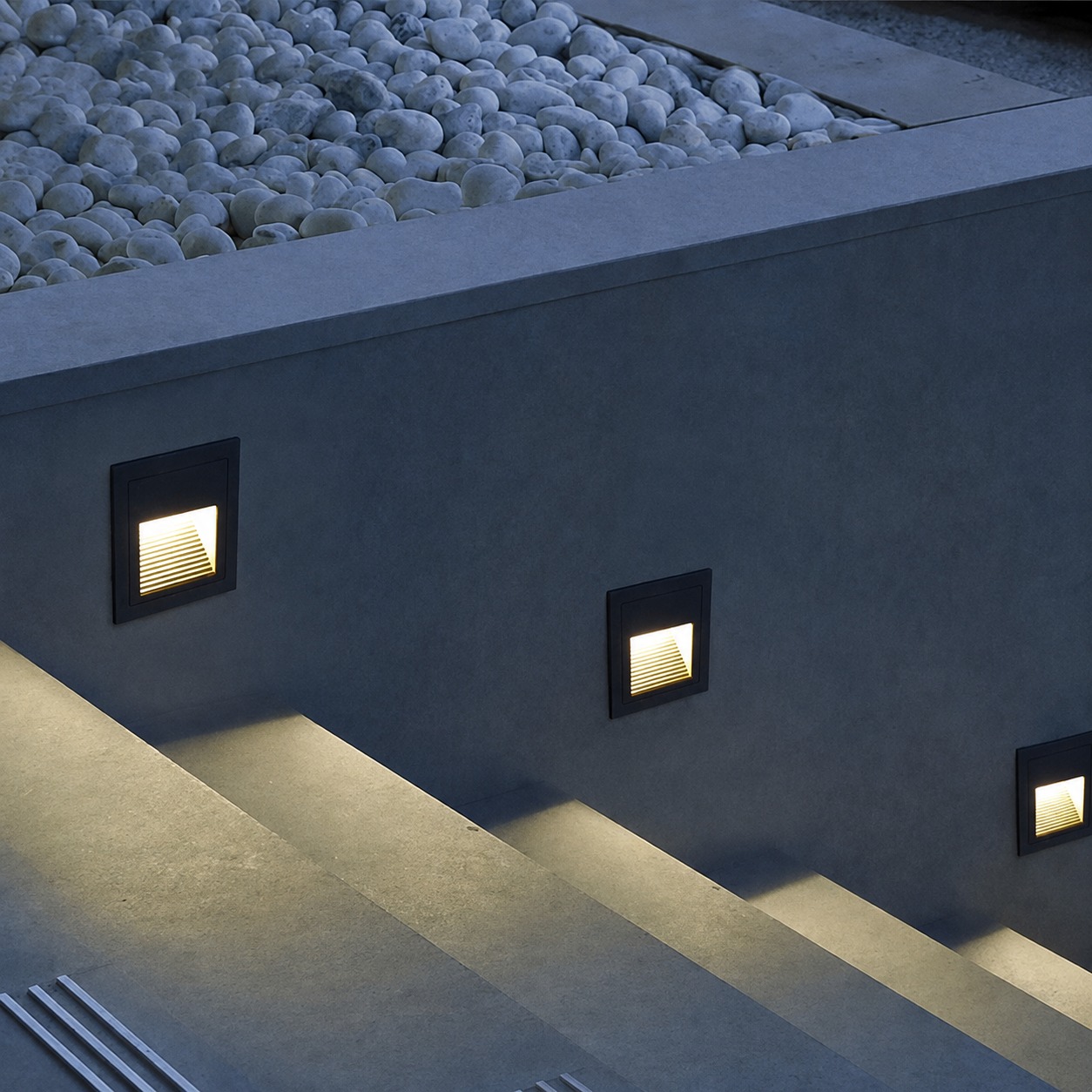
The right staircase light starts with the staircase you have: a finished hallway, a wall still being plastered, or outdoor entrance steps. Choose the mounting method and control first, then compare light colour and dimensions. A sensor fitting is useful for occasional journeys; a recessed fitting needs space inside the wall; a surface-mounted light projects into the space instead.
This guide compares the current Patiolume staircase and LED step lights using their listed specifications. It is written by Patiolume as the retailer, not presented as an independent test. Product images below are catalogue images, not customer installation photographs.
Compare the staircase lights
These are the differences that matter before choosing a finish or buying a bundle. The comparison follows the products available in this storefront region; listed voltage is not a substitute for checking installation requirements.
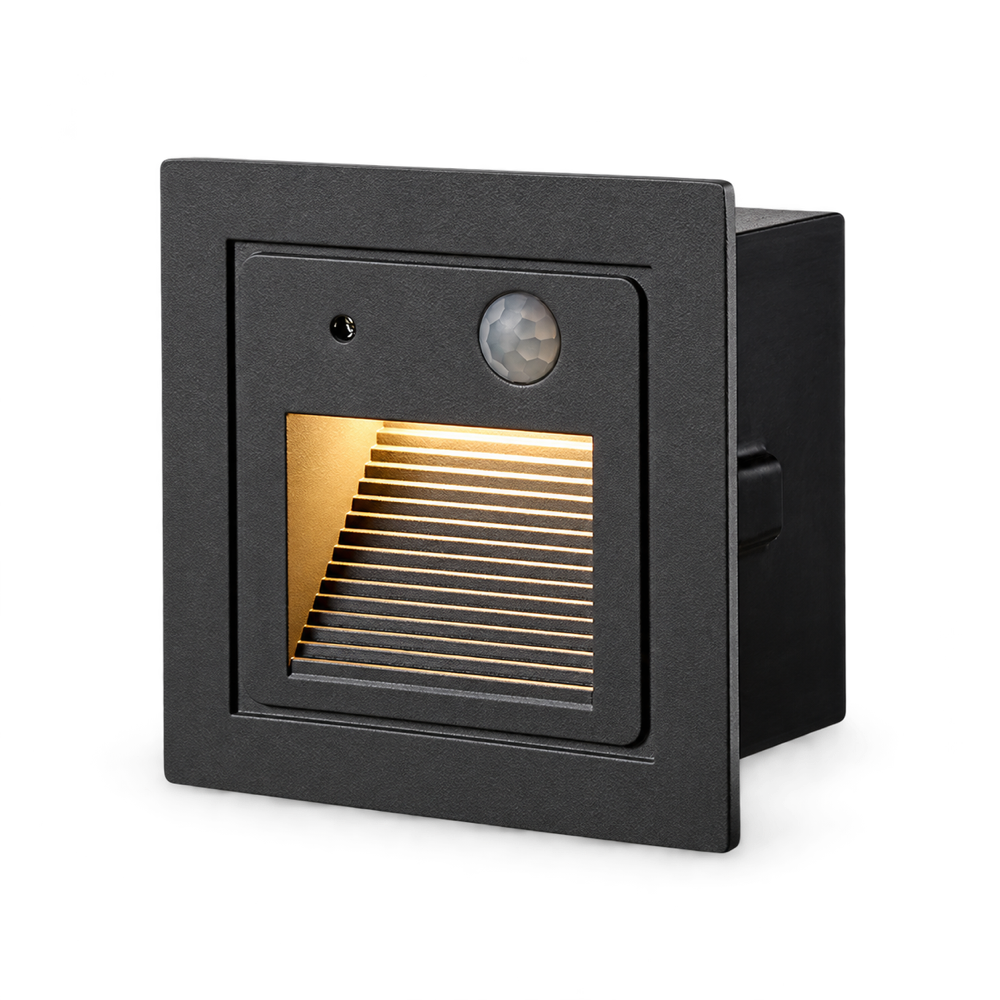
Motion Sensor Stair Light – 3W
- Controls
- Motion induction
- Mounting
- Wall-mounted; confirm mounting requirements
- Dimensions
- 86 × 86 × 30 mm
- Input voltage
- AC 85–265V
- Light colours
- Warm white or white light
- Power
- 3W
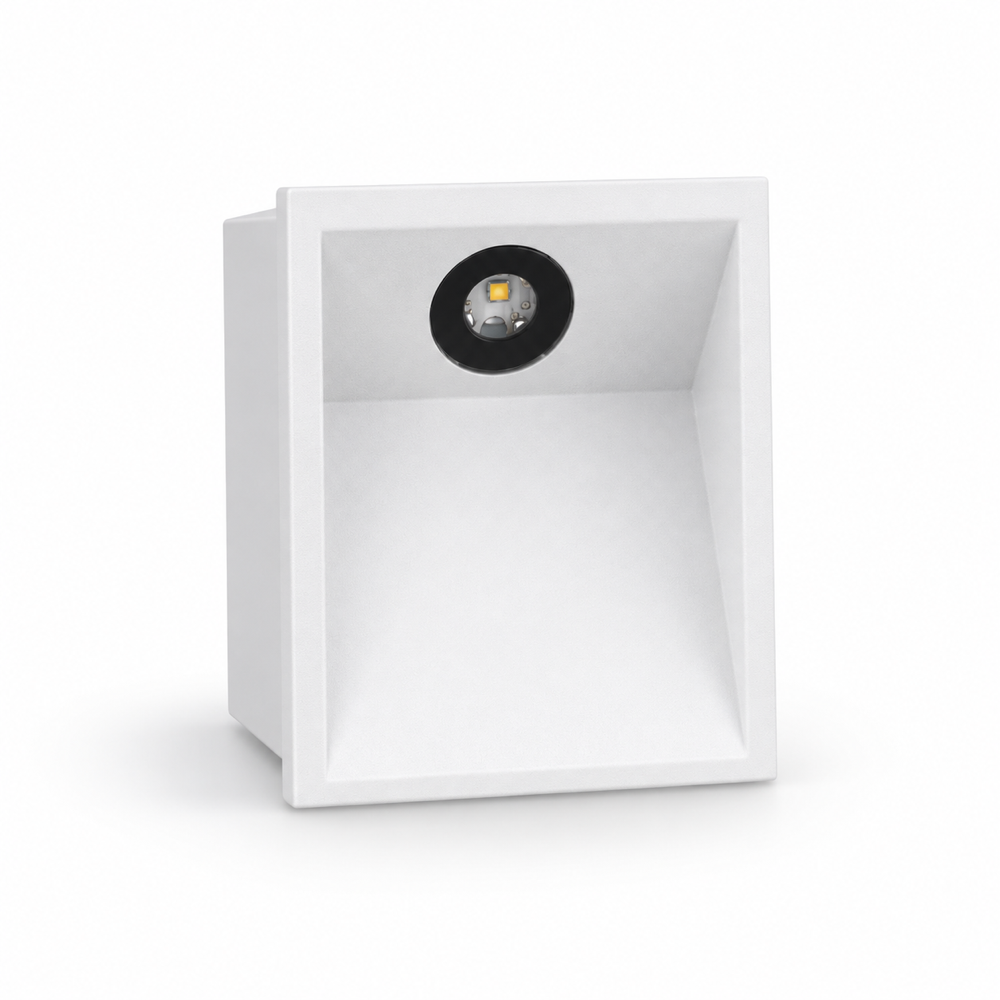
Recessed Stair Light with Motion Sensor Options
- Controls
- Always on, motion, or motion + light control
- Mounting
- Recessed wall-mounted
- Dimensions
- Confirm dimensions and cut-out before ordering
- Input voltage
- 100–250V
- Light colours
- 3000–6000K
- Power
- Not specified in the current listing
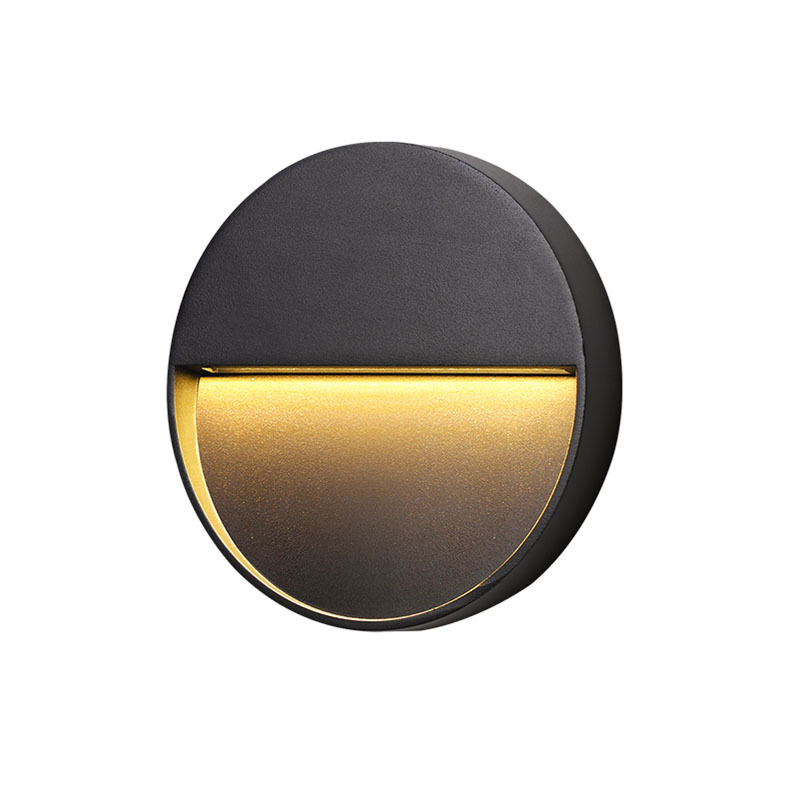
Surface Mounted Outdoor Step Light – 20 cm
- Controls
- No sensor option listed
- Mounting
- Surface-mounted wall fitting
- Dimensions
- 200 mm diameter × 30 mm depth
- Input voltage
- 220V
- Light colours
- Warm white or white light
- Power
- 6W integrated LED
The figures above come from our product catalogue. Where dimensions, frequency, sensor range or an IP rating are not listed, ask us for the exact model details before ordering. A voltage range or an IP rating alone does not establish US or EU certification.
Motion sensor or always-on lighting?
If you want the light to respond as someone approaches, compare the Induction Staircase Light with the motion-sensor versions of the Frameless Magnetic Stair Light. The induction model is offered only with a sensor. The frameless model also offers always-on and motion-plus-light-control variants, so selecting the correct option matters just as much as selecting the product.
Motion sensing and ambient-light control are different functions: movement triggers one, while the other uses surrounding light levels as part of its control. Do not assume every motion variant has both. For the exact option you plan to buy, confirm the detection angle, distance, activation time and whether those settings are adjustable. Those values are not currently listed in our comparison, so we do not prescribe a sensor layout around them.
An always-on option can suit a deliberately controlled lighting circuit, but its name does not mean you should leave it running continuously. Discuss switching and any intended dimmer with your installer; dimming compatibility should never be assumed from the fact that a fitting uses LEDs.
Recessed or surface-mounted: start with the wall
The Frameless Magnetic Stair Light is a recessed fitting. It is worth considering while wall finishes and cable routes are still being planned, because the recess and access for connections need to be resolved before decorating. Confirm the cut-out and installation depth for the square or rectangular version you choose: the current catalogue does not give those dimensions.
A surface-mounted fitting avoids a recessed body but still needs an appropriate fixing surface and electrical connection. On the product page, distinguish the visible face dimensions from the opening or box needed behind it. For example, the Induction Staircase Light's listed 86 × 86 × 30 mm dimensions describe the fitting; they do not confirm a required wall cut-out. “Magnetic” in a product name should not be read as battery-powered or wiring-free.
How many lights do you need, and where should they go?
Sketch the flight, including its first and last steps, any turns, landings and doorways. Decide where the beam needs to fall and check the view when walking both upstairs and downstairs. The aim is to make the route readable without putting an exposed light source directly in someone's line of sight. Low-level accent fittings should complement the staircase's general lighting, not automatically replace it.
There is no reliable “one fitting every two steps” rule for all three models. Beam spread, lumen output, mounting position, stair width and surface reflectance affect the result; our catalogue does not provide a measured lighting plan for your staircase. Ask your installer to assess the layout, and consider a sample before committing to a full set.
Buy the bundle that matches the confirmed fitting count, rather than designing around a discount. The induction and frameless models currently offer single, four-, eight- and twelve-light options. If your plan needs eight fittings, an eight-light bundle is a straightforward comparison; a twelve-light pack is not inherently better value if four lights will go unused. The product page shows the current total and any bundle saving for the selected option.
Choose light colour separately from brightness
A warm-white option is worth comparing with the adjoining hallway or living-room lighting when you want a consistent evening appearance. A whiter light may be your preference beside cooler finishes. Compare a sample against the actual wall and flooring, rather than relying on the colour of a screen photograph. See our warm-white versus cool-white guide for the broader differences.
Colour temperature is expressed in kelvin; brightness is measured in lumens, not watts. A 6W light is therefore not automatically twice as bright on your stair tread as a 3W light. The Energy Saving Trust's lighting guide explains these measures. For this range, ask for lumen output and beam information if you need to compare actual illumination rather than power consumption.
A short checklist before you order
- Identify the exact variant. Check shape, light colour and sensor choice together.
- Confirm the mounting space. Obtain the cut-out, depth and connection requirements before preparing the wall.
- Check the electrical label. Your installer should confirm input voltage, frequency, wiring requirements and applicable local requirements for the exact supplied model.
- Check exposure outdoors. Verify the stated IP rating, installation instructions and suitability for the actual location. Read our outdoor IP-rating guide; do not treat an indoor fitting as weatherproof.
- Confirm controls and quantity. Ask about sensor settings and dimming, then select the bundle that matches your installation plan.
Use a qualified professional for mains electrical work. If a specification you need is missing, ask Patiolume about the model and your intended location before placing the order. Include the product name, your country, whether the steps are indoors or outdoors, and the wall depth available.
Catalogue comparison updated 22 October 2026. Product pages are the source for current options, regional availability and prices.
← Back to Blogs