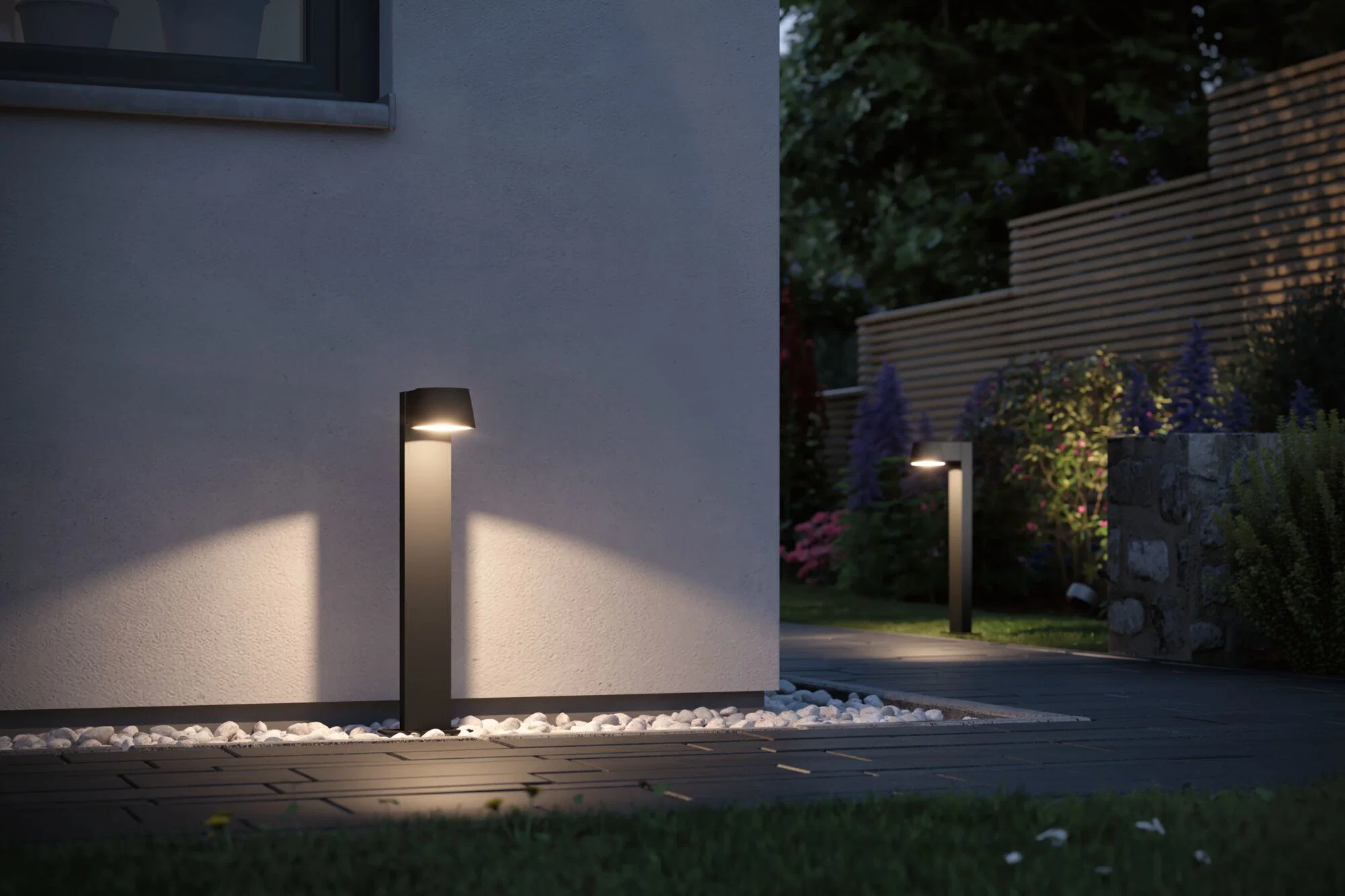
Bollard lights work best when they create a calm visual rhythm rather than a row of isolated bright spots. Their purpose is usually to reveal the route, nearby planting and changes in level without flattening the garden into one uniformly lit surface. The right spacing depends on fitting height, beam spread, surrounding materials and how much ambient light already reaches the space.
There is no single spacing measurement that works for every project. A narrow path beside a pale wall reflects more light than a wide route surrounded by dark planting. Treat the first layout as a starting point, then assess how the overlapping pools of light feel from the direction people will actually approach.
Start with the path, not the product
Mark the walking route first and identify bends, steps, gates, entrances and changes in level. These are the places that need the clearest visual guidance. A perfectly even row may look tidy on a plan while leaving an important turn in shadow, so allow the architecture and movement through the site to determine the final positions.
Begin at the points that must be visible and work outward. This approach often uses fewer fittings more effectively, keeps wiring simpler and prevents unnecessary brightness in planting beds or neighbouring spaces.
Use height and beam together
Short bollards create an intimate, low-level effect but generally need closer spacing. Taller fittings can spread light farther, while shielded or directional heads place more of the output on the ground and reduce glare. Beam pattern matters as much as wattage: a controlled beam may guide a route more successfully than a brighter, exposed source.
For a first estimate, imagine where one fitting’s useful light begins to fade and place the next before the route disappears. Test the design after dark where possible, beginning with wider spacing and adding light only where the path still feels unclear.
Keep the view comfortable
Place fittings consistently on one side for a formal route, or alternate sides where planting and path geometry benefit from a softer rhythm. Keep exposed light sources away from normal eye level and direct illumination down or across the walking surface. Consider the view from inside the home as well as from the path.
The finished scheme should help people recognise edges and obstacles without making the landscape feel overlit. Confirm the product voltage, weather rating and installation requirements, and use a qualified professional for mains electrical work.
Product specifications, regional pricing and delivery eligibility can change. Check the relevant Patiolume product page before ordering.
← Back to Blogs