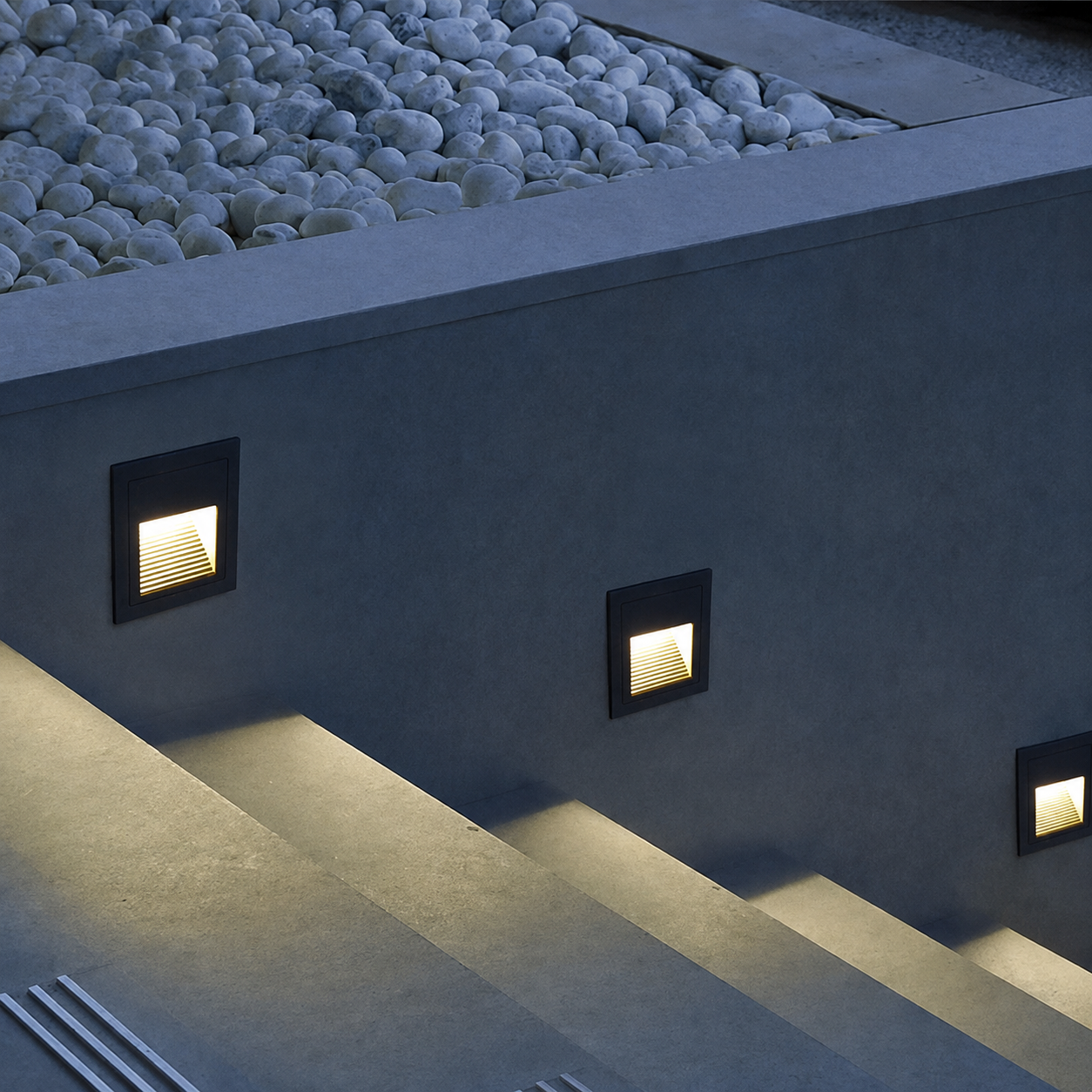
Staircase lighting should make every change in level legible without competing with the architecture. A restrained low-level scheme usually feels calmer and more considered than relying only on a bright overhead source. The aim is to reveal tread edges, landings and direction changes while keeping glare out of the normal line of sight.
Plan the lighting before finishes and wiring routes are fixed wherever possible. Early coordination makes it easier to keep spacing consistent, conceal connections and position each fitting where it contributes useful light rather than simply filling an available wall space.
Light the route continuously
Start with the first and last step, then identify landings, turns and any interruption in the rhythm of the staircase. These locations need clear visual continuity. Intermediate fittings can then be spaced so their pools of light overlap gently rather than producing alternating bright and dark treads.
Motion-induction fittings can be useful where the staircase is used intermittently and the lights should respond automatically. Steady illumination may suit busy circulation areas or homes where a constant low-level night light feels more predictable.
Control glare
Position fittings so the source is not directly visible when someone approaches from the top or bottom. Recessed, shielded or carefully louvred forms can keep illumination on the tread and riser rather than in the viewer’s eyes. Highly polished surfaces may also reflect a source that seems concealed from another angle.
Check the staircase from both directions and from nearby rooms. A fitting that feels comfortable while climbing may appear bright when viewed from a landing, so mounting height and beam direction should be assessed together.
Treat wiring as part of the design
Mains-connected staircase lights require careful planning of cable routes, drivers, switches, sensors and access for maintenance. Confirm whether the chosen fitting needs a separate driver or installation recess before wall finishes are completed. Consistent cut-outs and mounting heights make a significant difference to the finished result.
Always check the product voltage, dimensions and installation instructions before ordering. Use a qualified professional for mains electrical work and ensure the final installation complies with the requirements that apply in your location.
Product specifications, regional pricing and delivery eligibility can change. Check the relevant Patiolume product page before ordering.
← Back to Blogs