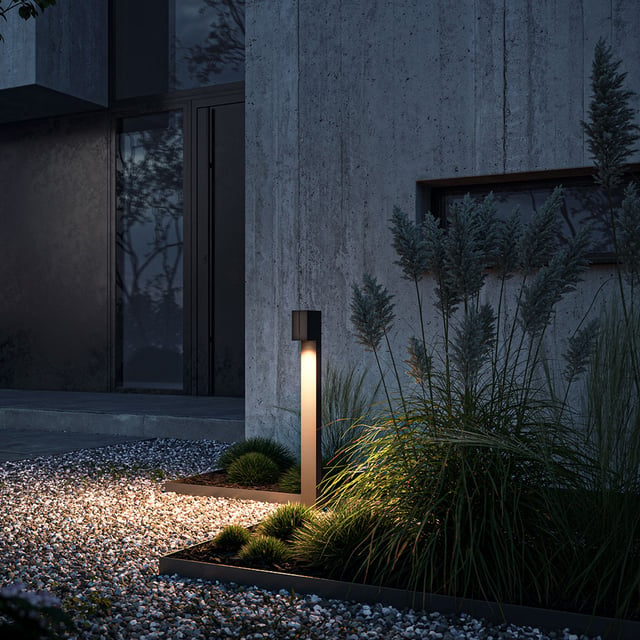
Colour temperature changes the atmosphere of a room or exterior more than many people expect. Measured in kelvins, it describes whether white light appears warmer and more golden or cooler and more neutral. The best choice depends on the materials, purpose, time of use and existing light around the fitting.
It is useful to judge colour temperature as part of a complete space rather than as a product option in isolation. Wall colour, timber, stone, metal finishes and daylight can all change how the same lamp appears once installed.
Warm white
Warm white light creates a softer and more relaxed appearance. It works naturally with timber, warm stone, textured walls, bedrooms, living rooms and spaces used mainly in the evening. Around 2700K to 3000K is a common reference range, although the exact appearance varies between light sources and surrounding finishes.
Warm white is often the easiest choice when the goal is atmosphere rather than visual sharpness. Outdoors, it can soften masonry and planting while reducing the clinical feeling that sometimes comes from very cool light after dark.
Cool white
Cooler white light can feel cleaner and more precise. It may suit work areas, utility rooms, contemporary finishes and locations where details need to read clearly. Neutral or cooler temperatures can also complement concrete, stainless steel and crisp white surfaces when used deliberately.
Too much cool light in a room intended for relaxation can feel stark, particularly at night. Use it selectively, control glare and consider whether the brighter visual impression supports the way the space is actually used.
Keep one scheme in mind
When several fittings share the same view, keep their colour temperatures compatible. Compare the stated variant and technical specification rather than relying on a product photograph, because screens and camera settings can alter colour. If possible, choose one reference temperature for connected areas such as a hallway, staircase and entrance.
Where a space combines warm and cool sources, separate them by purpose or zone so the difference feels deliberate. Task lighting can be more neutral while decorative and evening lighting remains warm, provided the transition does not create an accidental patchwork.
Product specifications, regional pricing and delivery eligibility can change. Check the relevant Patiolume product page before ordering.
← Back to Blogs